
Austria's Armed Forces are building their own gateway to space

When it comes to defence in orbit, Austria has until now been mainly a customer. Satellite imagery, navigation signals, secure links: the Austrian Armed Forces, Bundesheer, sourced all of it from others, chiefly the United States or civilian (again, mostly US) companies. With five of its own satellites, set to go up from the first quarter of 2027, the military wants to change that.
"What we're talking about here is the Bundesheer evolving," says Major General Friedrich Teichmann, who heads the programme at the Federal Ministry of Defence (BMLV). In short, it is the step from user to operator.
A Homegrown Satellite Constellation
Three fields of application sit behind the plan, which Teichmann calls the decisive ones for the military:
- satellite communications,
- satellite navigation and
- satellite reconnaissance.
For each of these services the Bundesheer has developed a demonstrator, test platforms meant to deliver data and hands-on experience first.
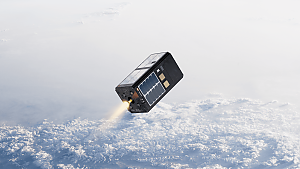
First up is BEACONSAT: a satellite designed for navigation which, at roughly 32 kilograms, is also the largest ever built in Austria. It is being developed by the Schwechat-based start-up Gate Space, with a BMLV budget of around one million euros. From orbit, the satellite is meant to hunt down interference with navigation signals.
"This is about detecting jamming and spoofing from space," Teichmann says.
What makes it relevant well beyond Austria: BEACONSAT is designed to measure not only the American GPS but also the availability of Europe's Galileo satellite navigation system.

That puts us in a position to make a European contribution, in form of a real Galileo monitoring from space, not just from the ground.
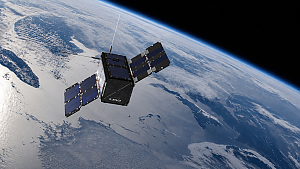
In the second quarter of 2027, Aurora, a demonstrator for satellite communications, is set to follow.
The lead here is R-Space, another Schwechat-based start-up, with the optical payload coming from qtlabs.
The small satellite, built to a 3U design, will test optical laser communication.
We’re taking a very modern approach here for three reasons: first, we want to sidestep the frequency problem; second, to enable higher bandwidth; and third, to test the option of quantum cryptography.
Traditional radio frequencies, he says, have long been "more than booked out, more than sold." The switch to lasers promises greater data throughput and, further down the line, secure communications.
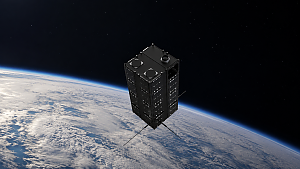
The biggest chunk is LEO2VLEO, a joint reconnaissance project with the Netherlands. Six million euros are earmarked for it. Four satellites are planned, of which three are actually meant to fly; the fourth stays on the ground as an engineering model.
Their standout feature is mobility: they can change altitude in orbit, dropping from low Earth orbit (LEO) at around 500 kilometres down to very low Earth orbit (VLEO) at about 250 kilometres. Down there, the cameras deliver far sharper resolution.
The satellites are then meant to climb back up to conserve their lifespan. Launch is planned for the end of 2027. The satellites will be operated by the Dutch partners, while the BMLV handles the data analysis.
All told, that adds up to five flying satellites and an Austrian funding share of just under ten million euros for the current constellation, though running them is likely to require additional money over the coming years. The roughly one million euros per individual project essentially covers construction and transport into orbit, so data analysis and the ongoing control of the satellite are not yet included.
Building on the three test satellites, the Bundesheer wants to establish its own constellation for each service. Whether Austria should finance this alone, or plans joint funding with a European partner, has not yet been decided.
When it came to choosing the launch vehicle to carry each satellite into orbit, the military had little room to manoeuvre — much to the regret of those in charge.
We tried everything we could to avoid having to go with SpaceX.
Europe's flagship Ariane is out, because it doesn't fly to the target orbit and would in any case be oversized for the small Austrian satellites. Other European providers "simply don't have a good track record yet." For now, that leaves only Elon Musk's US company, currently "by far the cheapest provider, and the one most likely to deliver the launch slot on schedule and on budget."
But it isn't meant to be a permanent arrangement:
We won't be flying up with SpaceX forever. In three years, we hope European providers will be ready.
Exactly how space will be embedded within the military's structure remains open. For now, space services sit within the IT/cyber domain, and the final set-up has not been decided.
"There are various options, and they also depend on the Federal Chancellery and on the organisational structure," Teichmann says. The ministry is "in the middle of its 2032 development plan," in which space needs to be properly integrated. Spinning it off into its own unit is conceivable, as is keeping it within the ICT area.
Choosing the partners
The selection of the development firms was preceded by lengthy groundwork. The Bundesheer commissioned a feasibility study from Joanneum Resarch to establish whether Austria's space industry was even capable of building such satellites.
In parallel, research topics were pursued over roughly five years with partners such as the FFG, the European Space Agency (ESA) and within the KIRAS and FORTE security-research programmes. Those experiences, and the fact that individual companies came to the table with their own funding, ultimately shaped the choice. Should another company turn up with its own money, it too would get a place, Teichmann stresses.
Innovation scouting
That leaves the question of why the Austrian Armed Forces want to go into space now of all times. In scouting for new capabilities, they take their cues from lessons learned, from networking with other nations and with industry, and from how the space capabilities of potentially security-relevant actors are developing, and what countermeasures might come into play.
For Teichmann, the choice of space comes down to a simple dependency:
The digital battlefield demands that we connect everything, and that only works if I have the space technologies in my own hands.
The war in Ukraine, he says, has laid that bare. Without satellite communications, nothing can be achieved on the battlefield; without navigation, "everything flies off somewhere, just not where it's supposed to go", and the only way to see across the border is satellite imagery.
None of this is a new realisation, the Major General stresses and this is where the real heart of the rethink lies.
For 20 years we’ve known we need satellite imagery. For 20 years we’ve known we need satellite communications. For 20 years we’ve known navigation matters. None of it was unknown. What has changed is something else: The big difference is that the umbilical cord to the Americans now has to be cut.
For the past three or four years, the old reflex of turning to the US for support when in doubt has no longer been tenable in security-policy terms. Those who can no longer piggyback have to do it themselves. That, Teichmann says, is the real paradigm shift.
For that to succeed, Austria needs domestic companies capable of taking charge of entire satellites. A supplier of just one small component is of little use to the Bundesheer. What's wanted are end-to-end players who can design, build, launch and operate a complete system.
Austria's space scene is small, and the relationship between the military and industry runs both ways: the military approaches the firms, just as the firms are welcome to approach the military. Above all, though, the doors are meant to stay open.
Both Major General Teichmann personally and the BMLV remain keen on cooperation on projects with a security-relevant angle. Anyone with a fitting idea or technology is invited to get in touch.